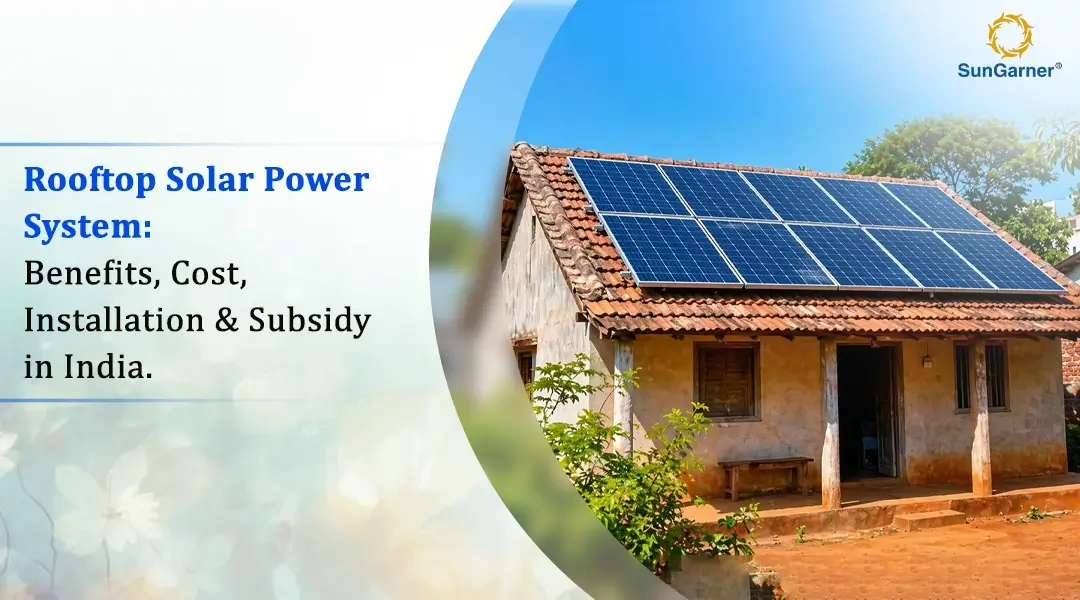
Rooftop Solar Power System: Benefits, Cost, Installation & Subsidy in India
A rooftop solar power system is one of the most effective ways for Indian households and businesses to reduce electricity bills and adopt clean energy. By installing roof solar panels on a residential or commercial rooftop, sunlight is converted into electricity that can be used directly in the building......
A rooftop solar power system is one of the most effective ways for Indian households and businesses to reduce electricity bills and adopt clean energy. By installing roof solar panels on a residential or commercial rooftop, sunlight is converted into electricity that can be used directly in the building. Depending on the system type, extra electricity can also be stored in batteries or exported to the grid through net metering.
With government support such as the PM Surya Ghar: Muft Bijli Yojana, rooftop solar adoption has increased significantly due to attractive subsidies and long-term savings.
This guide explains everything you need to know about a rooftop solar system, including benefits, installation steps, pricing, subsidy details, and long-term returns.
What Is a Rooftop Solar Power System?
A rooftop solar power system is a solar electricity generation setup installed on the roof of a building. It consists of solar panels, an inverter, mounting structures, electrical wiring, and sometimes batteries.
The solar panel system generates DC electricity from sunlight, which is converted into usable AC electricity through a solar inverter. The electricity can be used for household appliances, office equipment, or industrial loads.
A rooftop system is also referred to as:
- Rooftop solar power plant
- Solar panel in rooftop system
- Roof solar panels system
- Rooftop solar system India
Types of Rooftop Solar Systems in India
Choosing the right rooftop solar system depends on your electricity needs, budget, and whether you need backup power.
1. On-Grid Rooftop Solar System
An on-grid rooftop solar system is connected to the electricity grid. It works with solar net metering, which allows you to export extra electricity to the grid and receive credit.
Best for: Homes and businesses with stable grid electricity.
Pros:
- Lower cost (no batteries needed)
- Eligible for government subsidy
- Net metering savings
Cons:
- Does not provide backup during power cuts unless paired with a hybrid inverter/battery system
2. Off-Grid Rooftop Solar System
An off-grid rooftop solar system works independently without a grid connection. It uses batteries to store solar power for use at night or during power cuts.
Best for: Remote areas with frequent power cuts.
Pros:
- Full energy independence
- Works during outages
Cons:
- Higher cost due to battery requirement
- Battery replacement expense after a few years
3. Hybrid Rooftop Solar System
A hybrid system combines grid connectivity with battery storage. It can export power through net metering and also provide backup power during outages.
Best for: Areas with power cuts but where net metering is available.
Pros:
- Backup power + net metering benefits
- Better reliability
Cons:
- Higher upfront investment than on-grid
Benefits of Installing Rooftop Solar Panels
Installing roof solar panels offers multiple financial and environmental advantages.
1. Lower Electricity Bills
A rooftop solar power plant reduces dependency on grid electricity. Many households reduce their electricity bill by 50% to 90% depending on system size and usage.
2. Long-Term Savings for 20–25 Years
Most solar panels come with performance warranties of 25 years. Once installed, your energy cost becomes predictable and stable.
3. Fast Payback Period
With subsidies and net metering, rooftop solar systems in India commonly recover their investment within 3 to 6 years depending on electricity tariff and consumption.
4. Protection Against Rising Electricity Tariffs
Electricity prices in India are expected to rise over time. A rooftop solar system protects you from increasing monthly bills.
5. Net Metering Advantage
With net metering, excess electricity exported to the grid reduces your net electricity charges. This improves the overall ROI significantly.
6. Environment-Friendly Energy
Solar power reduces carbon emissions and dependence on coal-based electricity generation, contributing to cleaner air and sustainable development.
7. Higher Property Value
Homes with rooftop solar panels often gain higher resale value due to reduced electricity costs and energy efficiency.
Rooftop Solar System Cost in India (2026 Estimates)
The cost of a rooftop solar system depends on panel brand, inverter type, installation quality, structure type, and location.
Below is an estimated pricing table for India (including installation but excluding battery costs):
|
System Size |
Estimated Cost (Before Subsidy) |
Estimated Cost (After Subsidy) |
|
1 kW |
₹65,000 – ₹90,000 |
₹45,000 – ₹75,000 |
|
3 kW |
₹1,80,000 – ₹2,70,000 |
₹1,25,000 – ₹2,00,000 |
|
5 kW |
₹2,70,000 – ₹4,00,000 |
₹1,90,000 – ₹3,00,000 |
|
10 kW |
₹5,00,000 – ₹9,00,000 |
₹3,50,000 – ₹6,50,000 |
Important note: Prices vary based on city, vendor margin, structure complexity, inverter quality, and whether the system is ALMM-compliant.
Most Indian homes choose a 3 kW to 5 kW rooftop solar power system because it offers an ideal balance between roof space, budget, and electricity savings.
How Much Roof Space Is Needed?
Roof area requirements vary based on panel wattage and layout.
Approximate rooftop space needed:
- 1 kW system: 80–100 sq. ft.
- 3 kW system: 250–300 sq. ft.
- 5 kW system: 400–500 sq. ft.
- 10 kW system: 800–1000 sq. ft.
If your roof has shading or irregular structure, additional area may be required.
Rooftop Solar Installation Process (Step-by-Step)
A professional installation ensures safety, performance, and subsidy eligibility.
Step 1: Site Survey and Roof Inspection
The installer checks:
- Roof strength
- Orientation (south-facing is best in India)
- Shading issues
- Available area
- Existing electrical load
Step 2: System Design and Generation Estimate
Based on your electricity bill and load profile, the installer calculates the system size and expected annual generation.
Step 3: Final Quotation and Component Selection
A complete rooftop solar system typically includes:
- Solar panels
- Solar inverter
- Mounting structures
- DC and AC cables
- Earthing and lightning arrestor
- Junction boxes
- Monitoring system (optional)
Step 4: Approval and Net Metering Application
For on-grid systems, the vendor applies for:
- DISCOM approval
- Net meter installation
- Grid connectivity permissions
Step 5: Installation Work
Panels are mounted securely with proper tilt angle. Wiring and inverter installation is done following electrical safety standards.
Step 6: Testing, Inspection and Commissioning
The system is tested for:
- Output voltage and current
- Earthing resistance
- Inverter performance
- Export-import meter operation (net meter)
Once approved, the rooftop solar system is commissioned.
Government Subsidy for Rooftop Solar in India (2026)
The Government of India supports rooftop solar adoption through MNRE-linked programs, including the PM Surya Ghar: Muft Bijli Yojana.
This subsidy is available mainly for grid-connected residential rooftop solar systems installed through approved vendors.
Central Government Subsidy Structure (Common Format)
Typical subsidy limits include:
- Up to ₹30,000 for 1 kW
- Up to ₹60,000 for 2 kW
- Up to ₹78,000 for 3 kW and above (maximum cap)
Note: The subsidy amount and eligibility conditions may vary based on policy updates and DISCOM rules.
State-Level Rooftop Solar Incentives
Apart from the central subsidy, many states offer additional benefits such as:
- Reduced electricity duty
- Additional capital subsidy
- Faster net-metering approvals
- Special schemes for rural or low-income households
Since rules differ by state, homeowners should confirm current incentives through their DISCOM portal or state renewable energy agency.
Eligibility for Rooftop Solar Subsidy in India
In most cases, you can apply for rooftop solar subsidy if:
- You are a residential electricity consumer
- Your rooftop solar system is grid-connected
- Net metering is applied through the local DISCOM
- Installation is done by an approved vendor
- Equipment meets MNRE and ALMM requirements
Commercial and industrial systems generally do not receive the same subsidy benefits but can still gain strong ROI due to high tariffs.
Documents Required for Rooftop Solar Subsidy and Net Metering
Most DISCOMs require the following documents:
- Latest electricity bill
- Aadhaar card / PAN card
- Proof of property ownership
- Passport-size photograph
- Bank account details for subsidy transfer
- Rooftop permission letter (if property is shared or rented)
Exact documentation may vary slightly depending on state and DISCOM.
Solar Net Metering India: How It Works
Net metering is one of the most valuable benefits of an on-grid rooftop solar power system.
If your system generates extra electricity during the day, it is exported to the grid. The net meter records:
- Units imported from grid
- Units exported to grid
At the end of the billing cycle, your electricity bill is adjusted based on the difference. This can drastically reduce monthly charges.
Net metering rules vary by state, so always check the latest solar net metering India policy under your DISCOM.
Expected Power Generation from Rooftop Solar Panels
Solar generation depends on sunlight availability, weather, and panel efficiency.
Approximate daily generation in India:
- 1 kW system: 4–5 units/day
- 3 kW system: 12–15 units/day
- 5 kW system: 20–25 units/day
- 10 kW system: 40–50 units/day
This can vary by location. Cities like Delhi, Jaipur, Nagpur, and Hyderabad often have high solar output due to strong sunlight levels.
Savings and Payback Calculation (Example)
Let’s consider a common case:
Example: 3 kW Rooftop Solar System
- Average generation: 12 units/day
- Monthly generation: 360 units
- Average electricity tariff: ₹7/unit
Monthly savings:
360 × ₹7 = ₹2,520
Annual savings:
₹2,520 × 12 = ₹30,240
If the system cost after subsidy is approximately ₹1,50,000, then:
Payback period:
₹1,50,000 / ₹30,240 = around 5 years
After payback, electricity becomes nearly free for the remaining system life of 20+ years.
Maintenance Cost of Rooftop Solar Systems
Rooftop solar systems require minimal maintenance.
Typical maintenance includes:
- Cleaning solar panels every 15–30 days (depending on dust level)
- Checking inverter performance
- Inspecting wiring and earthing once a year
Annual maintenance cost is usually low, especially for residential rooftop systems.
Warranties You Should Expect
Before buying, ensure your vendor provides clear warranty details:
- Solar panels: 25 years performance warranty
- Inverter: 5 to 10 years warranty (depending on brand)
- Structure and installation workmanship: 1 to 5 years
- Batteries (if used): usually 3 to 7 years depending on type
Always ask for written warranty documentation.
Common Mistakes to Avoid While Installing Rooftop Solar
Many buyers lose savings due to poor decisions. Avoid these mistakes:
- Choosing the cheapest vendor without checking quality
- Installing non-standard mounting structures
- Ignoring proper earthing and lightning protection
- Not confirming net metering approval before installation
- Buying low-quality inverter brands without service support
- Not checking ALMM compliance (important for subsidy eligibility)
Final Thoughts: Should You Install a Rooftop Solar Power Plant?
A rooftop solar power system in India is a smart long-term investment. It reduces electricity bills, increases energy independence, and supports sustainability. With government schemes, net metering, and subsidies available in many states, installing solar panels on rooftop is now more affordable than ever.
If you want maximum benefit, ensure you choose the right system size, use high-quality components, and install through an experienced vendor with proper DISCOM approvals.
A properly installed rooftop solar power plant can provide reliable savings for over 20 years.
Frequently Asked Questions (FAQs)
Q: Do rooftop solar systems work during power cuts?
A:
- On-grid rooftop solar systems stop during outages for safety reasons.
- Off-grid and hybrid systems can supply electricity during power cuts using batteries.
Q: How long do rooftop solar panels last?
A: Most solar panels last 25 years or more. Performance slowly reduces over time, but good-quality panels remain effective for decades.
Q: Can I sell electricity to the grid?
A: Yes, through net metering. Your DISCOM must allow net metering and your system must be approved.
Q: Is rooftop solar worth it in India?
A: Yes. With rising electricity tariffs and government support, rooftop solar is one of the best long-term investments for households and businesses.