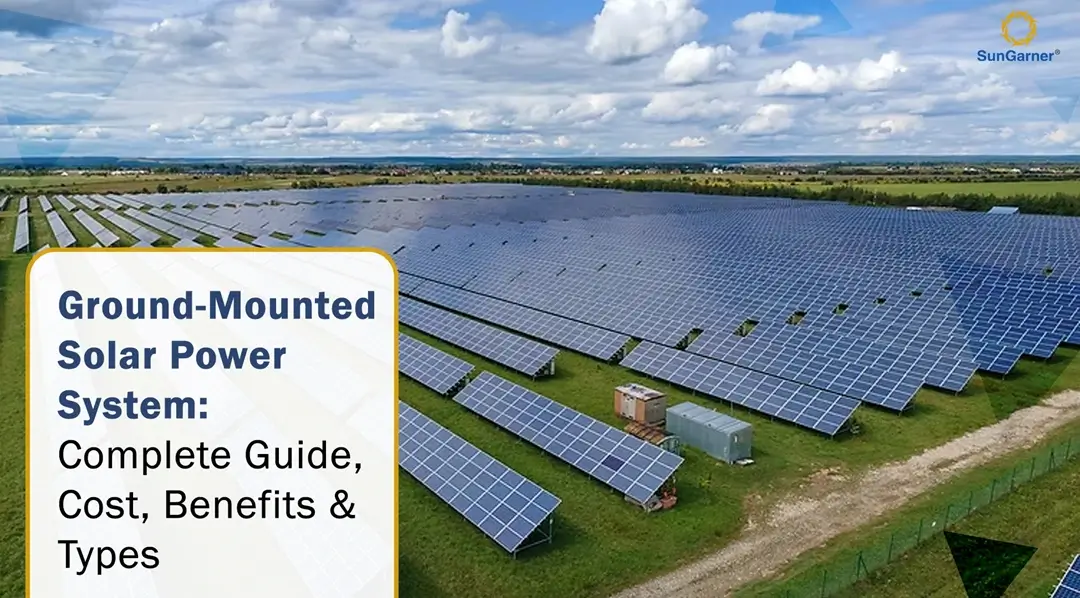
Ground-Mounted Solar Power System: Complete Guide, Cost, Benefits & Types
Ground-mounted solar power systems are becoming the preferred choice for large-scale solar projects in India, especially for industries, solar farms, and institutions that have access to open land. Unlike rooftop solar, these systems are installed directly on the ground using heavy-duty mounting structures, allowing better design flexibility, higher capacity installation, and easier long-term maintenance......
Ground-mounted solar power systems are becoming the preferred choice for large-scale solar projects in India, especially for industries, solar farms, and institutions that have access to open land. Unlike rooftop solar, these systems are installed directly on the ground using heavy-duty mounting structures, allowing better design flexibility, higher capacity installation, and easier long-term maintenance. In this guide, you’ll learn what a ground-mounted solar system is, how it works, its types, cost in India (2026 estimates), land requirement, generation potential, and whether it is the right investment for your project.
What Is a Ground-Mounted Solar Power System?
A ground-mounted solar power system is a solar plant installed on open land instead of rooftops. The solar panels are mounted on metal frames and fixed on foundations that provide stability against wind load, rain, and soil movement.
This type of solar system is commonly used in:
- Utility-scale solar farms
- Commercial and industrial solar power plants
- Captive solar installations for factories
- Agricultural solar projects
- Government and institutional solar parks
Ground-mounted systems are designed to maximize sunlight exposure by optimizing tilt angle, orientation, and spacing between panel rows.
Key Features of Ground-Mounted Solar Systems
Ground-mounted solar installations have certain unique features that make them ideal for large projects:
- Installed on open land or unused plots
- Uses dedicated solar panel mounting structures
- Can be fixed-tilt or tracker-based
- Suitable for MW-scale solar power plants
- Easier cleaning and maintenance compared to rooftop systems
- Allows better airflow under panels, improving efficiency
Because land is available, designers can optimize the layout for maximum power output and long-term reliability.
How Does a Ground-Mounted Solar Plant Work?
A ground-mounted solar power plant works using photovoltaic (PV) technology. Solar panels absorb sunlight and convert it into direct current (DC) electricity. This electricity is then converted into alternating current (AC) using a solar inverter, which is the type of electricity used in industries and the grid.
The system may either supply power directly to the user (captive solar) or export it to the grid (utility plant).
Main Components of a Ground-Mounted Solar System
Solar Panels (PV Modules)
Capture sunlight and produce DC electricity.
Mounting Structure (Ground Mounted Solar Structure)
A steel or aluminum structure that holds the panels at the correct tilt angle.
Foundation System
May include pile-driven foundations, RCC foundations, or screw piles depending on soil type.
Inverter
Converts DC electricity into usable AC power.
Combiner Boxes and Cabling
Connect strings of solar modules and transmit power safely.
Transformer and HT Switchgear (for MW Projects)
Step-up transformers are used to export power to the grid at higher voltage.
Monitoring System (SCADA)
Tracks generation performance and plant health.
Optional Solar Trackers
Track the sun’s movement to increase generation.
Types of Ground-Mounted Solar Power Systems
Ground-mounted solar systems are categorized based on structure design, tracking technology, and connectivity.
1. Types Based on Mounting Structure
Standard Ground Rack System
This is the most common type. Panels are mounted on rows of steel frames fixed into the ground.
Best for:
- Large open land
- Utility-scale solar farms
- Industrial captive plants
Pole Mounted System
Panels are mounted on elevated poles, usually in smaller setups or uneven terrain.
Best for:
- Rural areas
- Uneven land
- Small commercial applications
2. Types Based on Solar Tracking Technology
Fixed Tilt Ground Mounted Solar System
Panels are installed at a fixed angle and do not move. This is the most affordable and widely used option.
Advantages:
- Lower installation cost
- Lower maintenance
- High reliability
Single-Axis Tracker System
Panels rotate east to west throughout the day.
Typical benefit:
- 10% to 20% higher generation than fixed-tilt
Suitable for:
- Large solar farms where land is available
Dual-Axis Tracker System
Panels track both east-west and north-south movement.
Typical benefit:
- 25% to 35% higher generation than fixed tilt
However, it requires higher investment and higher maintenance, which is why it is used selectively.
3. Types Based on Connectivity
On-Grid Ground Mounted Solar System
Connected to the grid. Power is used directly, and surplus can be exported depending on the project model.
Best for:
- Commercial and industrial consumers
- Utility-scale power plants
Off-Grid Ground Mounted Solar System
Independent system that includes battery storage.
Best for:
- Remote villages
- Farms without stable electricity
- Rural infrastructure projects
Hybrid Ground Mounted Solar System
Connected to the grid with battery backup.
Best for:
- Hospitals, cold storage, and critical industrial loads
Ground Mounted Solar Cost in India (2026 Estimates)
The cost of a ground-mounted solar power plant depends on multiple factors such as plant size, land development, structure type, and grid connectivity.
Average Utility-Scale Cost (India)
- Approximately ₹2.5 crore to ₹3 crore per MW (2026 estimate)
Smaller installations usually cost more per kW because fixed costs like civil work and infrastructure are distributed over fewer panels.
Major Cost Factors in Ground-Mounted Solar Projects
The final project cost is affected by:
- Land clearing and leveling
- Soil testing and foundation type
- Ground mounted solar structure cost
- Module and inverter brand selection
- Cable length and electrical layout
- Tracker cost (if installed)
- Transformer, HT panel, and grid evacuation cost
- SCADA monitoring system cost
- Fencing, drainage, and security arrangements
- Operation and maintenance cost (O&M)
Ground-mounted solar plants generally cost more than rooftop solar due to additional civil and infrastructure work.
Land Requirement for Ground Mounted Solar Power Plant
One of the most common questions in India is the land required for a solar farm.
Land Required for 1 MW Solar Plant
In most Indian conditions:
- 1 MW ground-mounted solar requires around 4 to 5 acres of land
The requirement may increase if:
- trackers are used
- land is uneven
- additional roads and drainage are required
For example:
- 5 MW plant may require 20 to 25 acres
- 10 MW plant may require 40 to 50 acres
How Much Electricity Does a Ground-Mounted Solar Plant Generate?
Electricity generation depends on solar irradiation, tilt angle, shading, module efficiency, and inverter performance.
Typical Generation Estimate in India
A 1 MW ground-mounted solar plant can generate approximately:
- 14 lakh to 17 lakh units (kWh) per year
High solar radiation states like Rajasthan, Gujarat, and parts of Maharashtra often generate on the higher side.
Payback Period of Ground Mounted Solar Plant in India
The payback period depends on electricity tariff, financing, and plant efficiency.
Typical Payback Range
- Industrial captive solar: 3 to 5 years
- Utility-scale projects: 5 to 8 years (depending on PPA tariff and financing)
After payback, solar plants continue producing power for 25 years or more, making them a long-term low-cost energy solution.
Advantages of Ground Mounted Solar Panels
Ground-mounted solar is preferred for large installations because it offers multiple practical benefits.
1. Better Sunlight Exposure and Higher Efficiency
Panels can be installed at the ideal tilt and direction. There are fewer limitations compared to rooftops, which improves energy yield.
2. Scalable for MW Projects and Solar Farms
Ground mounted solar is ideal for solar farms, industrial power plants, and large renewable energy projects. Expansion is easier because additional land can be utilized.
3. Higher Generation with Trackers
Single-axis and dual-axis trackers can significantly improve output by following the sun throughout the day, especially in large-scale projects.
4. Easier Maintenance and Cleaning
Since panels are accessible from ground level, cleaning and inspection are simpler, faster, and safer than rooftop maintenance.
5. Improved Cooling and Panel Performance
Ground-mounted systems allow airflow under panels, keeping module temperature lower and improving efficiency.
6. Long-Term Environmental and Financial Value
Ground-mounted solar reduces dependence on fossil fuels, lowers electricity cost, and supports sustainability goals.
Challenges and Limitations of Ground Mounted Solar Systems
While ground-mounted solar is highly effective, it has some limitations that project developers should consider.
Higher Upfront Cost
Civil work, structure foundations, and grid infrastructure increase initial investment compared to rooftop solar.
Large Land Requirement
Urban areas may not have enough land availability, making rooftop solar more practical in cities.
Land Approvals and Documentation
Land conversion, lease agreements, and regulatory approvals may take time, especially for large projects.
Grid Connectivity and Evacuation Issues
For large MW projects, the availability of grid connection and evacuation infrastructure can impact timelines.
Dust and Vegetation Management
Open land projects require ongoing vegetation control and regular cleaning due to dust accumulation.
O&M Cost and Maintenance Requirements
Operation and Maintenance (O&M) is a key part of long-term performance.
Typical O&M includes:
- Module cleaning schedule
- Inverter health monitoring
- DC/AC cable inspection
- Earthing and lightning protection checks
- SCADA monitoring and performance reporting
- Transformer and HT panel maintenance
- Structure inspection for corrosion or loosening
A well-maintained plant ensures stable generation for 25+ years.
Ground Mounted Solar vs Rooftop Solar (Quick Comparison)
Ground-mounted solar is best when land is available and high capacity is required, while rooftop solar is best when space is limited and power demand is moderate.
Ground-mounted solar is generally preferred for:
- solar farms
- industrial captive plants
- MW-scale power plants
Rooftop solar is preferred for:
- residential homes
- small businesses
- urban commercial buildings
Who Should Choose Ground Mounted Solar?
Ground mounted solar projects are ideal for:
Utility and Solar Farm Developers
Perfect for MW-scale solar farms where power is sold to DISCOMs or through PPAs.
Industries and Manufacturing Units
Captive solar plants help reduce high electricity bills and provide long-term tariff stability.
Institutions and Commercial Campuses
Hospitals, universities, warehouses, and large offices benefit from large ground installations.
Agriculture and Rural Projects
Ground-mounted solar is useful for irrigation pumps, cold storage, and rural electrification where land is available.
Real-World Case Studies (SunGarner Projects)
SunGarner has successfully executed multiple large-scale ground-mounted solar power projects, delivering reliable performance, long-term savings, and sustainable energy solutions. Below are two key projects that highlight our capability in planning, engineering, and commissioning MW-scale solar power plants in India.
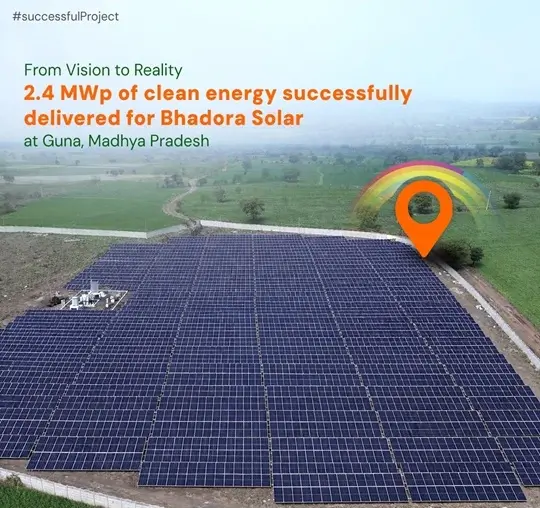
Case Study 1: 2.4 MWp Ground-Mounted Solar Power Plant – Bhadora Solar
SunGarner successfully installed a 2.4 MWp ground-mounted solar power plant for Bhadora Solar in Guna, Madhya Pradesh. This project reflects our expertise in delivering utility-scale renewable energy solutions with a strong focus on efficiency, durability, and long-term output. The plant supports clean energy generation while helping the client achieve sustainable growth and significant electricity cost savings over the long term.
Project Highlights:
- Project Capacity: 2.4 MWp
- Location: Guna, Madhya Pradesh
- System Type: Ground-Mounted Solar Power Plant
- Key Focus: High-efficiency execution, long-term performance, and sustainability impact
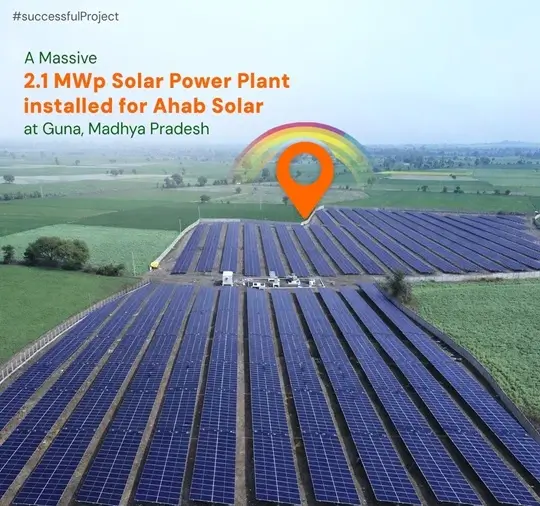
Case Study 2: 2.1 MWp Ground-Mounted Solar Power Plant – Ahab Solar
SunGarner proudly delivered a 2.1 MWp ground-mounted solar power plant for Ahab Solar in Guna, Madhya Pradesh. The project was executed using advanced solar engineering practices, optimized design planning, and reliable installation standards to ensure strong generation performance. This plant contributes to long-term clean energy production while supporting India’s growing transition toward renewable power.
Project Highlights:
- Project Capacity: 2.1 MWp
- Location: Guna, Madhya Pradesh
- System Type: Ground-Mounted Solar Power Plant
- Key Focus: Advanced technology integration, optimized engineering, and long-term reliability
Approvals and Permissions Required for Ground Mounted Solar in India
Depending on project size and location, approvals may include:
- Land ownership or lease documentation
- Land conversion (agricultural to industrial if required)
- DISCOM approval for grid connectivity
- Net metering approval (for smaller commercial plants)
- Electrical inspector approvals
- PPA agreement (for utility projects)
- Pollution and environmental clearance (for large solar parks in certain cases)
Approval requirements vary by state, so working with an experienced EPC company helps avoid delays.
Final Thoughts: Is Ground Mounted Solar Worth It?
A ground-mounted solar power system is one of the most effective renewable energy solutions for large-scale electricity generation. It offers better scalability, easier maintenance, and higher generation potential compared to rooftop systems.
Although the upfront cost and land requirement are higher, ground-mounted solar projects provide long-term savings, stable energy production, and strong ROI for industrial, commercial, and utility-scale applications.
If you have available land and want a long-term energy solution, investing in a ground-mounted solar power plant in 2026 is a strategic decision for both sustainability and financial benefits.
Frequently Asked Questions (FAQs)
Q: How much does a 1 MW ground mounted solar plant cost in India?
A: A 1 MW ground mounted solar power plant typically costs ₹2.5 crore to ₹3 crore depending on location, structure type, and grid infrastructure.
Q: How much land is required for 1 MW solar plant?
A: Most ground-mounted solar plants require around 4 to 5 acres per MW.
Q: How many units does 1 MW solar plant generate per day?
A: On average, a 1 MW solar plant generates around 3,800 to 4,700 units per day depending on irradiation and system performance.
Q: What is better: fixed tilt or solar tracker?
A: Fixed tilt is cheaper and low maintenance, while trackers generate more electricity but cost more. Trackers are better for large solar farms.
Q: What is the lifespan of a ground mounted solar plant?
A: Most plants operate for 25 to 30 years, depending on maintenance and equipment quality.