What is a solar power plant? How it works and types
A solar power plant is a facility that captures sunlight and converts it into electricity for homes, businesses, industries, or grid-level supply. Many people also call it a solar plant, and its main purpose is to generate power using clean and renewable solar energy....
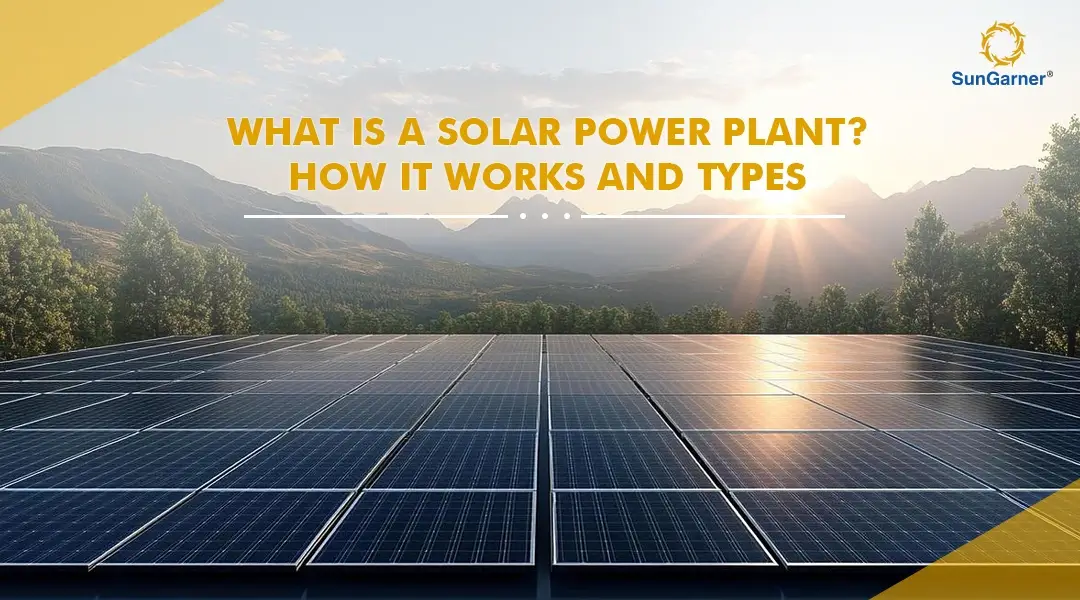
A solar power plant is a facility that captures sunlight and converts it into electricity for homes, businesses, industries, or grid-level supply. Many people also call it a solar plant, and its main purpose is to generate power using clean and renewable solar energy.
Unlike fossil-fuel power stations, solar plants generate electricity with near-zero emissions during operation. This makes them one of the most important technologies supporting the global shift toward sustainable energy.
Today, solar energy is among the fastest-growing electricity sources worldwide, and large-scale solar power plants play a major role in reducing dependency on coal, oil, and gas.
Solar Power Plant Working: How Does It Work? (Step-by-Step)
The working of a solar power plant depends on the technology used, but the overall process follows a simple flow: sunlight is captured, converted into electricity, and then supplied to the grid or end users.v
1. Capturing Sunlight
Solar power starts with sunlight, which contains solar radiation. When sunlight reaches the Earth, it carries photons (tiny packets of energy). A solar plant is designed to capture these photons and convert them into usable power.
2. Converting Sunlight into Electricity
There are two major technologies used in solar power plants:
A. Photovoltaic (PV) Conversion
Most modern solar power plants use solar panels made of photovoltaic (PV) cells. When sunlight hits these PV cells:
- Photons are absorbed by a semiconductor material (usually silicon).
- This energy excites electrons and creates an electric current.
- The electricity generated is direct current (DC).
- An inverter converts DC electricity into alternating current (AC), which is the type used in homes and utility grids.
This direct conversion of sunlight into electricity using solar panels is the most common solar power plant working method because it is scalable, reliable, and suitable for many regions.
B. Concentrated Solar Power (CSP)
Unlike PV solar plants, CSP systems generate electricity using heat. These plants concentrate sunlight using mirrors or lenses:
- Large mirrors (heliostats) track the sun and focus sunlight on a central receiver.
- The concentrated sunlight heats a fluid to extremely high temperatures.
- The heat produces steam.
- The steam drives a turbine connected to a generator, producing electricity.
CSP plants operate similarly to conventional thermal power plants, but instead of burning fuel, they use concentrated solar heat.
3. Electricity Distribution
After power is generated:
- Transformers increase the voltage.
- The electricity is transmitted through power lines.
- It is delivered to the distribution grid for homes, businesses, and industries.
This is how a utility-scale solar power plant supplies electricity to large areas.
Example: How Much Electricity Does a Solar Plant Generate?
The electricity generated by a solar plant depends on sunlight availability, location, system efficiency, and capacity factor.
For example:
- A 1 MW solar power plant can typically generate around 4,000 to 5,000 units (kWh) of electricity per day under good sunlight conditions.
- In a month, it may generate around 1.2 to 1.5 million units (kWh).
Actual generation varies depending on region, weather, and seasonal sunlight.
Types of Solar Power Plant Systems
There are different types of solar power plant designs based on technology and usage requirements.
1. Photovoltaic (PV) Solar Plants
PV solar plants are the most widely used type of solar power plant worldwide.
They:
- Use solar panels made of PV cells.
- Convert sunlight directly into electricity.
- Can be installed as small rooftop systems or large utility-scale solar farms.
PV plants are modular, scalable, and easier to maintain compared to other solar plant technologies.
Advantages of PV Solar Plants
- Low maintenance due to no moving parts
- Works in many climates and regions
- Easy to expand for larger capacity
- Fast installation compared to thermal plants
2. Concentrated Solar Power (CSP) Plants
CSP plants are larger and more complex solar power plants designed mainly for utility-scale electricity generation in sunny, dry regions.
They:
- Use mirrors or lenses to concentrate sunlight
- Produce heat that generates steam
- Run turbines to generate electricity
Many CSP plants can also store heat using molten salt systems, allowing them to generate power even after sunset.
Common CSP Configurations
- Solar power towers: Heliostat mirrors focus sunlight onto a central tower receiver
- Parabolic troughs: Curved mirrors focus sunlight onto receiver tubes
- Linear Fresnel systems: Flat mirrors concentrate sunlight onto elevated receivers
Advantages of CSP Solar Plants
- Can include thermal energy storage for evening or night operation
- Suitable for large-scale, grid-level electricity supply
- More stable output when storage is included
3. Hybrid and Advanced Solar Power Plants
New solar power plant designs combine multiple technologies to improve reliability and efficiency.
Common Hybrid Solar Systems
- PV + Battery storage systems for stable power supply
- PV + Wind hybrid plants for improved generation balance
- PV + Diesel hybrid systems for remote and off-grid regions
Floating Solar Power Plants
Floating solar plants are installed on lakes, reservoirs, and water bodies. They help save land and can improve panel efficiency due to cooling effects from water.
Hybrid systems are becoming popular because they provide more consistent energy output compared to standalone solar plants.
PV vs CSP Solar Plant: Quick Comparison
|
Feature |
PV Solar Plant |
CSP Solar Plant |
|
Technology |
Solar panels |
Mirrors and heat system |
|
Conversion |
Sunlight → electricity directly |
Sunlight → heat → steam → electricity |
|
Works in cloudy conditions |
Yes (reduced output) |
Less effective |
|
Best regions |
Most areas |
High-sun desert regions |
|
Storage option |
Batteries |
Thermal storage (molten salt) |
|
Maintenance |
Low |
Higher due to moving parts |
Solar Power Plant Components Worth Knowing
Understanding solar power plant components helps explain how power generation and grid delivery works.
|
Component |
Function |
|
Solar Panels (PV Modules) |
Capture sunlight and convert it into DC electricity |
|
Inverter |
Converts DC electricity into AC for household and grid use |
|
Transformers |
Increase voltage for long-distance power transmission |
|
Mounting Structures |
Hold panels in position and provide mechanical stability |
|
Tracking Systems |
Move panels or mirrors to follow the sun and improve output |
|
Combiner Box |
Combines current from multiple panel strings into one output |
|
Switchgear and Protection System |
Protects equipment from overload and faults |
|
Monitoring/SCADA System |
Tracks plant performance and detects faults |
These are the key solar power plant components that ensure safe and efficient operation.
Why Solar Power Plants Matter
Solar power plants are important because they support clean electricity generation and reduce environmental impact.
Key Benefits of Solar Power Plants
Renewable and abundant
Sunlight is available in most regions and is a long-term energy source.
Low environmental impact
Solar energy produces very low emissions during operation, and lifecycle emissions are far lower than fossil fuel-based power plants.
Cost-effective electricity generation
Solar plant costs have reduced significantly over the past decade, making solar energy one of the most competitive electricity sources.
Scalable for all power needs
Solar plants can be developed for small industries, commercial facilities, and large utility-scale electricity production.
Supports energy independence
Solar power reduces dependence on imported fuels and strengthens national energy security.
Conclusion
A solar power plant is an electricity generation facility that converts sunlight into usable power using solar energy technologies like photovoltaic systems and concentrated solar power systems. From solar panels capturing sunlight to inverters converting DC into AC power, solar plants play a major role in modern renewable electricity production.
By understanding the solar power plant working process, its major types, and key solar power plant components, it becomes clear why solar power is one of the most important solutions for clean and sustainable energy development worldwide.
Frequently Asked Questions (FAQ)
Q: What’s the main difference between a solar power plant and rooftop solar?
A: A solar power plant usually refers to utility-scale generation that supplies electricity to the grid, while rooftop solar systems are designed to power a specific home, office, or building.
Q: Do solar power plants work on cloudy days?
A: Yes. Solar plants can still generate electricity on cloudy days, but output decreases because sunlight intensity is lower. PV systems can still produce power using diffuse light.
Q: Can solar plants store energy?
A: Yes. CSP plants can store thermal energy (heat) using molten salt storage. PV solar plants can store electricity using battery energy storage systems.
Q: What is the difference between a solar farm and a solar power plant?
A: A solar farm usually refers to a large PV installation using solar panels, while a solar power plant can refer to PV, CSP, or hybrid systems combined with grid infrastructure and power delivery systems