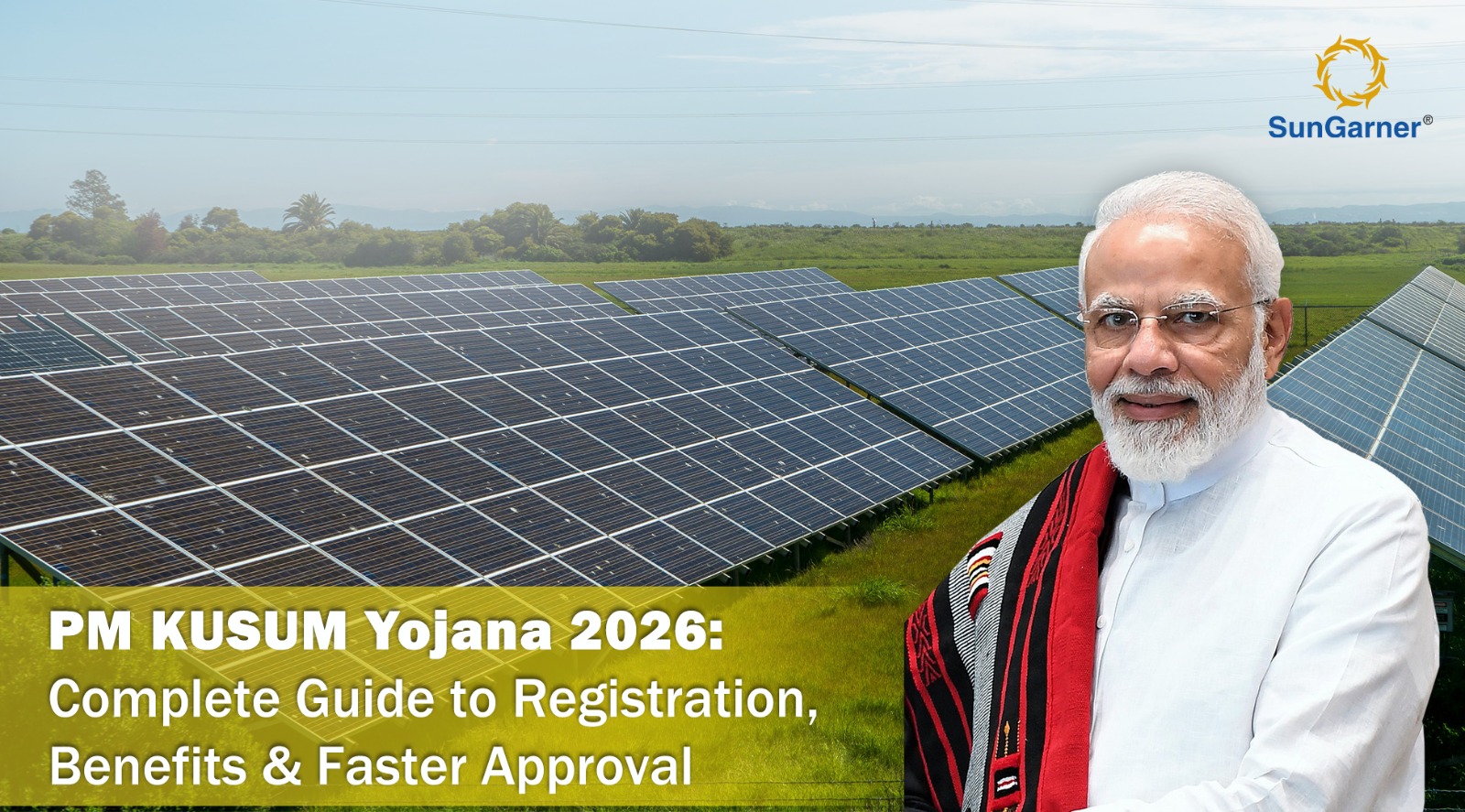
PM KUSUM Yojana 2026: Complete Guide to Registration, Benefits & Faster Approval
The PM KUSUM Yojana is a flagship MNRE solar scheme designed to promote solar energy adoption across agriculture and rural sectors in India.....
The PM KUSUM Yojana (Pradhan Mantri Kisan Urja Suraksha evam Utthaan Mahabhiyan) is one of India’s flagship MNRE solar schemes, designed to promote solar energy adoption, reduce electricity costs, and generate income opportunities across the agricultural and energy sectors.
This guide explains what PM KUSUM Yojana is, its components, registration process, eligibility, subsidies, and tips for faster approval. Whether you’re a farmer, small business owner, or renewable energy developer, this article helps you take actionable steps and make the most of the scheme.
What Is PM KUSUM Yojana?
The PM KUSUM Yojana supports solar-powered irrigation, grid-connected solar plants, and solarization of existing pumps. Its primary objectives are to:
- Reduce reliance on diesel and grid electricity
- Generate additional income by selling surplus energy
- Promote clean energy adoption in rural and semi-urban areas
The scheme is managed by the Ministry of New and Renewable Energy (MNRE) and implemented through state agriculture and energy departments.
Key Objectives of PM KUSUM Scheme
|
Objective |
Benefit |
|
Promote solar energy adoption |
Supports environmental sustainability and clean energy |
|
Reduce electricity/diesel costs |
Cuts operational expenses for farmers & small businesses |
|
Generate additional income |
Sell excess electricity to the grid |
|
Support India’s renewable targets |
Contributes to national clean energy goals |
PM KUSUM Components Explained
Component A – Grid-Connected Solar Power Plants
Purpose: Develop solar power plants (up to 2 MW) on barren or cultivable land.
Who it’s for: Landowners, solar developers, investors
Benefits:
- Long-term revenue through Power Purchase Agreements (PPA)
- Supports large-scale solar deployment
- Can integrate with micro-grid or community solar projects
Component B – Standalone Solar Pumps
Purpose: Install off-grid solar-powered irrigation pumps.
Who it’s for: Farmers, small enterprises, remote agricultural operations
Benefits:
- Zero dependency on grid power
- Eligible for central and state subsidies
- Reduces operating costs for irrigation and water management
Component C – Solarization of Existing Pumps
Purpose: Convert existing grid-connected agricultural pumps to solar-powered systems.
Who it’s for: Farmers, energy consultants, small businesses managing irrigation
Benefits:
- Lower electricity bills
- Ability to sell excess energy to the grid
- Faster return on investment (ROI)
Subsidy Table (Indicative, as per MNRE/state rules):
|
Component |
Subsidy % |
Beneficiaries |
|
KUSUM A |
30–40% |
Landowners, solar developers |
|
KUSUM B |
60–90% |
Small & marginal farmers, off-grid users |
|
KUSUM C |
30–60% |
Farmers/businesses with existing pumps |
Who Can Apply for PM KUSUM Yojana?
- Farmers and landowners with valid agricultural records
- Small businesses or cooperatives managing irrigation/solar farms
- Renewable energy developers planning grid-connected solar projects
- Eligibility depends on state rules, pump capacity, and component type
Step-by-Step Registration Process
Registration is online via MNRE or state portals. Follow these steps to avoid mistakes and delays:
- Visit the official PM KUSUM portal (MNRE/state portal)
- Select your state and the correct KUSUM component (A, B, or C)
- Enter details: Aadhaar, land records, bank information
- Upload required documents in clear format
- Submit application and save the acknowledgement/reference number
Pro Tip: Accurate documents and early submission improve approval speed.
Need help with PM KUSUM registration or solar installation?
Toll-Free Helpline: 1800-102-2748
Get expert support for PM KUSUM Yojana registration, document verification, and solar installation. Our team helps you avoid common mistakes and ensures faster approval.
Required Documents
- Aadhaar Card or alternative ID
- Land ownership or lease documents
- Electricity bill (for existing pumps, Component C)
- Bank account details
- Passport-size photograph
Note: Blurred or mismatched documents are the most common reason for application rejection.
Common Mistakes to Avoid
- Applying via unofficial or fake websites
- Selecting the wrong KUSUM component
- Incorrect Aadhaar, bank, or land details
- Uploading outdated or unclear documents
- Ignoring state-specific eligibility guidelines
Tips for Faster Approval
- Apply early during the registration period
- Double-check all documents for clarity and correctness
- Follow component- and state-specific rules
- Work with experienced solar solution providers or consultants
Disclaimer: Following these steps improves chances of approval, but the final decision rests with MNRE or state authorities.
Why Choose Expert Guidance?
Consulting experienced solar providers or MNRE-registered agents can help:
- Navigate complex registration steps
- Verify documents for accuracy
- Maximize subsidy benefits
- Reduce errors and avoid delays
Final Thoughts
The PM KUSUM Yojana is not just for farmers—it’s an opportunity for entrepreneurs, energy developers, and businesses to leverage solar energy for cost savings, income generation, and environmental impact.
By understanding scheme components, eligibility, and avoiding common mistakes, anyone can maximize benefits and secure faster approval.
Frequently Asked Questions (FAQs)
Q. Who is eligible for PM KUSUM Yojana?
A. Farmers, small businesses, or solar developers with valid land records and compliance with state guidelines.
Q. Is a subsidy available?
A. Yes, subsidies range from 30–90% depending on component and state.
Q. Can I apply online?
A. Yes. PM KUSUM Yojana registration is fully online via official MNRE/state portals.
Q. Can small businesses benefit?
A. Yes, small enterprises managing irrigation, solar farms, or community energy projects can apply under appropriate components.
Q. What happens to excess electricity?
A. Excess power can be sold back to the grid through MNRE-sanctioned Power Purchase Agreements.